In this article
Why are the terms confused?
Marketing copy often says "waterproof" when most products are really water-repellent. Manufacturers draw this line clearly, so check the test data before describing a product as waterproof.
Water-repellent zippers
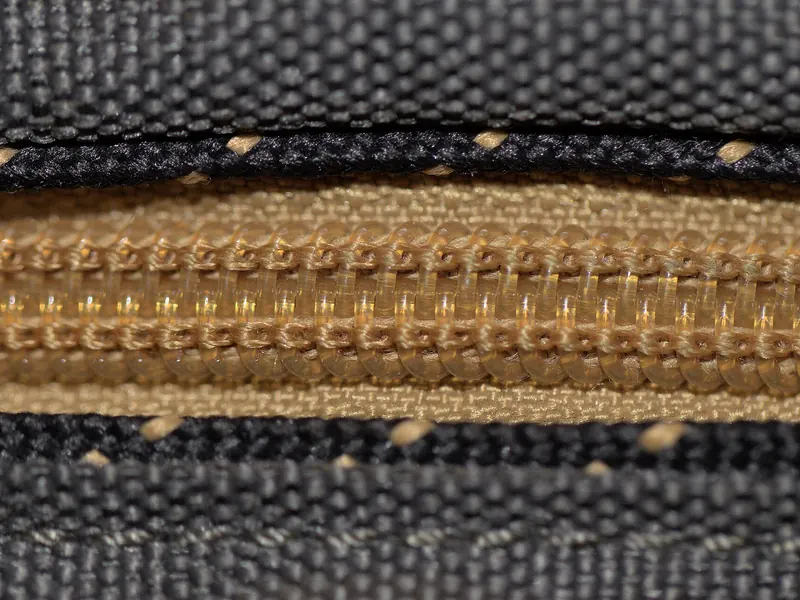
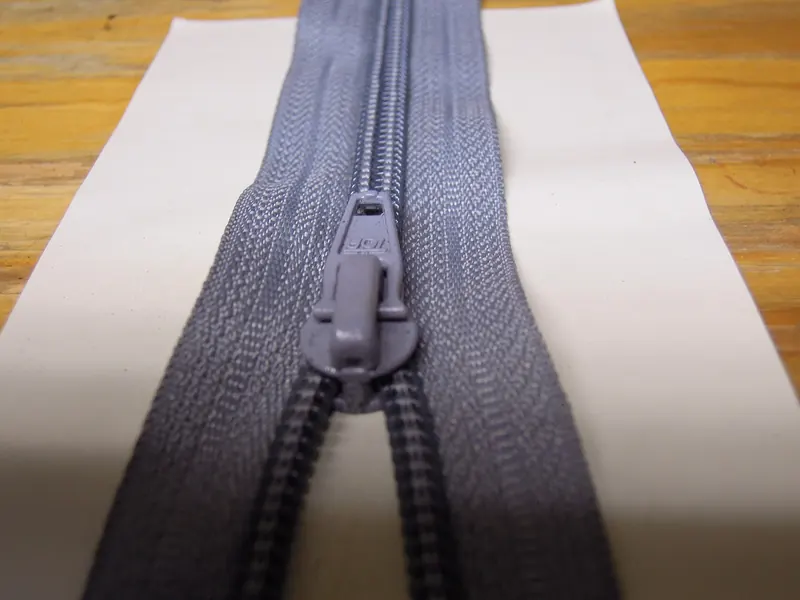
The tape usually carries a PU film, with coil or molded plastic teeth. They are common on rainwear, coats and outdoor products, but water can pass through the chain.
Waterproof zippers
These have a special plastic construction and are designed to resist water up to set pressure values. In technical fields such as diving and life-saving they are tested to separate standards. Performance varies by size and model.
Care and cautions
- PU-film zippers can blister at high heat and should not be ironed.
- Follow the manufacturer's temperature limit for heat bonding.
- Wash with the zipper closed and air-dry where possible.
Which do you need?
A water-repellent zipper is often enough for a rain jacket. If you need a seal under water or pressure, you need a technical product with stated test values.
How to read a product claim
When you see "waterproof", ask:
- Which test was carried out?
- What was the test pressure or duration?
- Which size does the value apply to?
- Were the slider and seams included?
Without answers, it is safer to treat the product as water-repellent. In translated texts, "water-resistant" is also sometimes wrongly rendered as "waterproof".
Which is used where?
| Use | Common choice |
|---|---|
| Rainwear, coats | Water-repellent |
| Outdoor clothing | Water-repellent |
| Diving, life-saving | Technical waterproof product |
| Marine and boat covers | Plastic chain and suitable slider |
Is the zipper alone enough?
No. Water resistance depends on the whole product. Needle holes, storm flaps, seam tape and fabric all affect the result. On a coat with a water-repellent zipper but untaped seams, water can still get in.
Production points
- On PU-film tapes, follow the maker's method rather than ironing.
- Do not exceed the heat-bonding limit. Manufacturer sources advise below 140 °C.
- Tape dye can transfer to PVC and PU surfaces, so test parts that touch.
Care
Wash with the zipper closed, prefer air-drying and do not store it wet. Rinse with fresh water after salt-water use.
Frequently asked questions
Is a water-repellent zipper waterproof?
No. It sheds most water, but water can seep through the chain.
Do truly waterproof zippers exist?
Yes, as specially built technical products. Their performance is limited to set pressure values by size and model.
Can you iron a water-repellent zipper?
It is generally not advised, as the PU film can blister at high heat.
Which zipper suits a rain jacket?
A water-repellent zipper is enough for most, but seams and flaps also affect the result.