In this article
How is a metal zipper made?
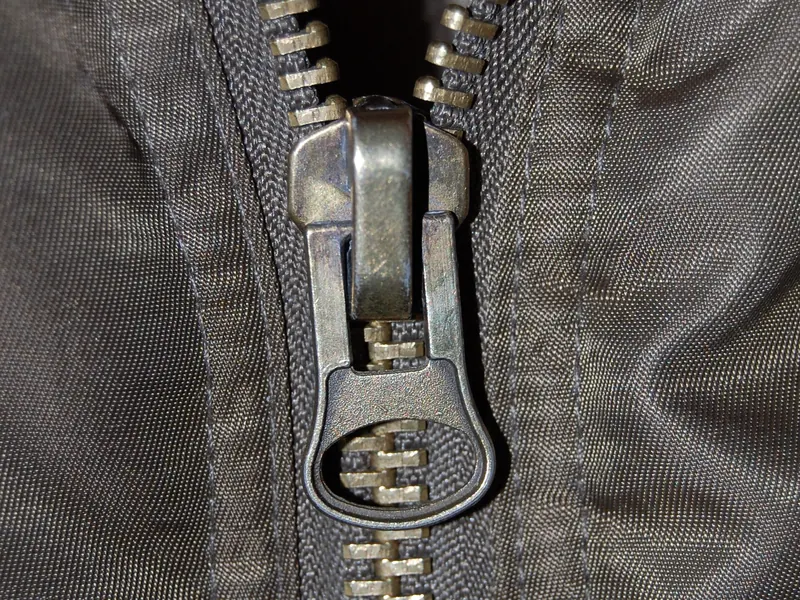
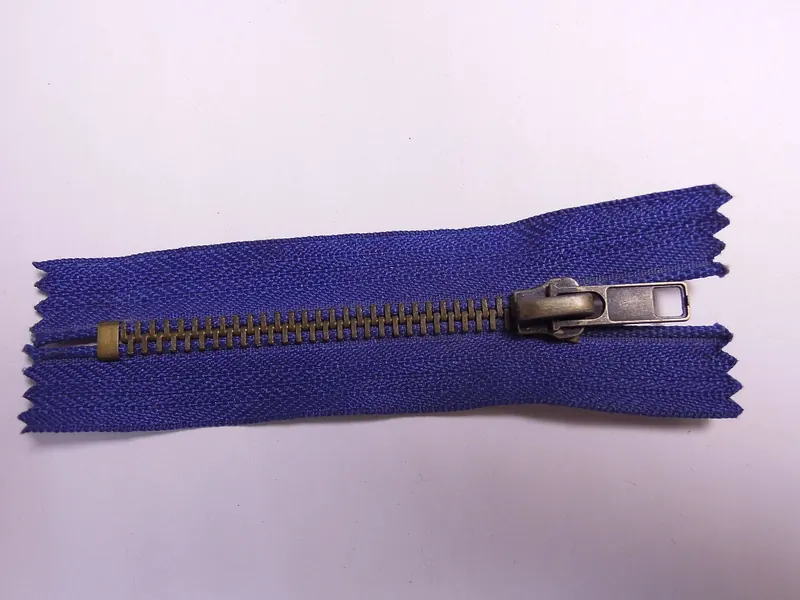
Individual metal teeth are clamped onto the corded edge of the tape. Teeth are usually brass, and sometimes aluminium. Brushing, polishing or plating then gives the final look.
Where is it used?
Jeans, leather garments, bags, boots, workwear and outerwear are the main uses. It is also chosen when the zipper should be a visible design detail.
Advantages
- Strong visual character and a wide range of finishes
- Matches metal trims such as buttons and rivets
- A solid feel on heavy fabrics
Points to watch
- Weight: Heavier than molded plastic of the same size.
- Chemicals: Bleach and some washes can change the colour. Test before dyeing or washing.
- Leather: Tanning chemicals can yellow the metal.
- Salt water: Metal sliders are generally not recommended in marine settings.
- Nickel: Check nickel rules for items in prolonged skin contact.
Aluminium teeth
Aluminium is light and economical, but it can react to moisture and chemicals and is more prone to wear and staining. It is not preferred for heavy processes such as denim washing.
Care and use rules
| Situation | Advice |
|---|---|
| Ironing | Zipper closed, with a cloth on top. The limit varies by maker |
| Bleach | Sodium hypochlorite and peroxide change the colour of copper alloys |
| Leather goods | Tanning chemicals can yellow the metal; test with a sample |
| Salt water | Plastic options suit better than metal sliders |
| Finish | Dark surfaces such as black oxide are more sensitive to abrasion |
Which size for which product?
Denim usually takes Size 4.5 or Size 5, leather jackets Size 5 and up, and boots Size 5 to 10. These are starting points; fabric weight and load decide. See the jeans zipper guide and the finish guide. Product details are on our metal zipper page.